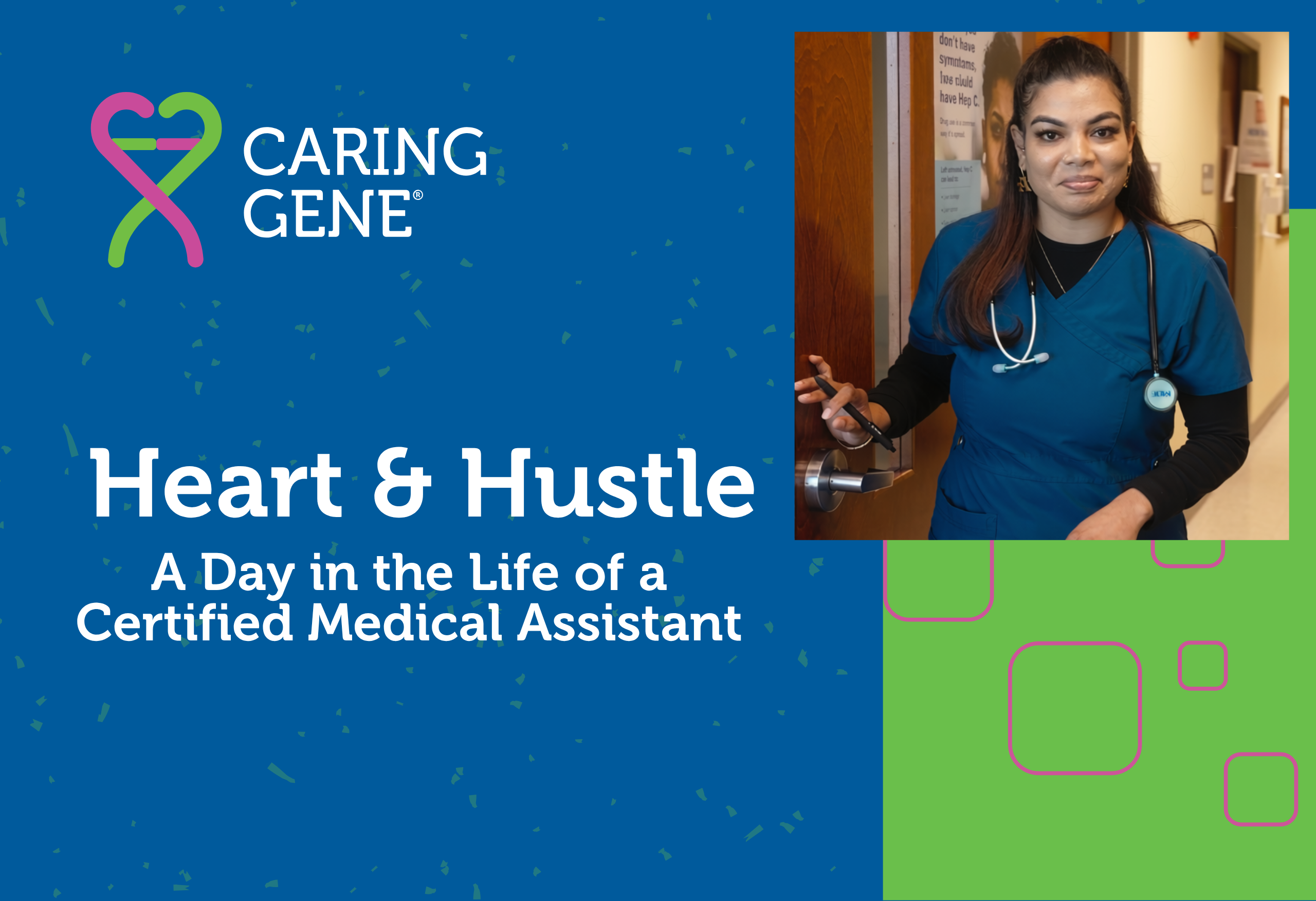
Heart & Hustle: A Day in the Life of a Certified Medical Assistant
Certified medical assistants (CMAs) are integral to the healthcare industry in all types of settings. They move patients through exam rooms, run diagnostic tests, and keep providers on schedule in outpatient clinics, hospital units, and urgent care centers.
Just ask Amanda Sahdeoghania. She’s been a certified medical assistant for more than five years, and the work isn’t so much a job as a calling.
“If I can make one patient smile each day, it makes me happy,” she says.
More than the exam room
Amanda completed a 12-month program at Allen Health in Queens, New York, which paired nine months of classroom instruction with a three-month internship. Like most CMA programs, hers required only a high school diploma to start, and provided education in the clinical and administrative skills necessary for success on the job.
In Amanda’s experience, the range of those skills often surprises people. “We do a lot,” she says with a smile. “People don’t always notice it, but we do.”
CMAs take patient vitals, conduct diagnostic tests and performs EKGs, and assist with procedures like ear flushes and urine dipstick tests. They also handle organizational tasks: scheduling appointments, sharing test results, and coordinating care between patients and providers.
A day in Amanda’s shoes
The range of certified medical assistant responsibilities is what drew Amanda to the role in the first place. It’s also part of why she still finds the work exciting after five years.
“Medical assistants run the floor,” she says. “We get patients in and out in a timely manner, and that’s what both patients and providers appreciate.”
In her current role, Amanda arrives early to open the clinic, prep exam rooms, and run quality checks before the first patient walks in. Once the day starts, she gathers patients’ medical histories, documents symptoms, and works closely with providers to run various exams and administer tests.
A quiet kind of care
Amanda traces her passion for healthcare back to her childhood in Guyana, watching her grandmother tend to elderly family members with a quiet patience. Years later, working as a home health aide in the United States, she found herself doing the same thing: sitting with a bedridden patient, offering the kind of compassion that cannot be documented on a chart.
When that patient passed away, her daughter called to thank Amanda for the kindness she’d shown during her mother’s final month. On the surface it was just a phone call, but for Amanda, it confirmed that this was indeed the work she was meant to do.
“Healthcare is a calling,” she says. “You have to love what you do.”
In the years ahead, Amanda hopes to earn her RN, building on everything she’s learned in her time as a CMA. But a new title will never change how she shows up for her patients and her colleagues. That’s simply who Amanda has always been, and always will be.